
Timidly Groundbreaking: The Indian Supreme Court’s Judgement on the Right to Menstrual Health
Ashly Jossy and Inga T. Winkler
A recent judgement by the Supreme Court of India recognising menstrual health as a fundamental eight has been widely applauded. But what does this judgement really mean when it comes to menstruation and social justice? We argue that the groundbreaking nature of the judgement lies in its articulation of menstrual health as menstrual literacy and bodily autonomy but also examine the judgment's shortcomings.
Jossy, A., & Winkler, I. T. (2026, March 4). Timidly Groundbreaking: The Indian Supreme Court’s Judgement on the Right to Menstrual Health, Oxford Human Rights Hub, https://ohrh.law.ox.ac.uk/timidly-groundbreaking-the-indian-supreme-courts-judgement-on-the-right-to-menstrual-health/

A bloodless menstrual cycle? The perceived and hormonal menstrual cycle-like experiences of transgender women in the United States
What defines the menstrual cycle? We often focus on menstrual bleeding, but what about cyclical experiences and hormonal changes?
In this study, we examine the bloodless menstrual cycle and investigate how transwomen experience and interpret cyclical symptoms in relation to conceptions of "womanhood" and how they align with hormonal changes.
Baron, A., Prochazka, S., Schipper, K., Shea, A., Goldsmith, J., Winkler, I. T., & Houghton, L. C. (2026). A bloodless menstrual cycle? The perceived and hormonal menstrual cycle-like experiences of transgender women in the United States International Journal Of Transgender 1.14 https://doi.org/10.1080/26895269.2026.2636663
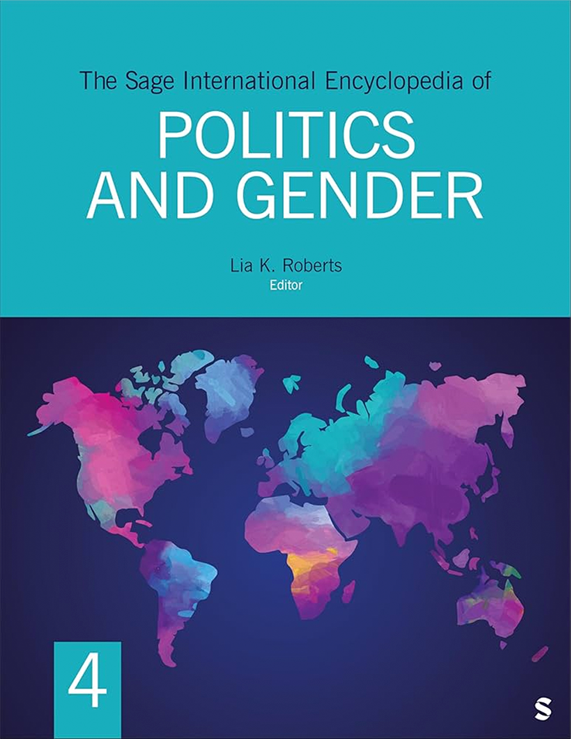
Menstrual Studies, Inga T. Winkler & Chris Bobel
We surveyed the field of menstrual studies arguing that the recent volume and cohesiveness of menstrual research marked its establishment as a field of study. We discuss the development and characteristics of menstrual studies as a field of research including its commitment to interdisciplinarity and inclusivity. We also point to the risks facing the field that lie in persistent stigmatization of menstruation and the rapid expansion of scholarship. To move forward, we argue that the richness of the field of menstrual studies is rooted it in its diversity of disciplines and approaches that critically investigate any potential question related to menstrual health and menstrual politics across the entire life course, in myriad contexts, and among a wide range of different populations and lived experiences.
Winkler, Inga T. and Chris Bobel. 2025. “Menstrual Studies.” In SAGE International Encyclopedia of Politics and Gender, edited by Lia Roberts

Image by Beauty in Blood
Menstrual Health Policies, Isabela Hummelgen & Inga T. Winkler
We provide a survey of menstrual health policies arguing that after long being invisible and neglected in public discourse, the inclusion of menstruation in policies is a sign of it becoming an issue that concerns society as a whole. Apart from addressing menstrual needs, including through education and information, accommodations at the workplace, and access to health care, policies also play a key role in normalizing menstruation as a matter of public concern. We use examples from different countries, notably Brazil, India, Kenya, Scotland, Spain, and the United States to discuss the scope, opportunities and limitations of such policies in providing for comprehensive care for menstrual health.
Winkler, Inga T. and Isabela Hummelgen. 2025. “Menstrual Health Policies.” In SAGE International Encyclopedia of Politics and Gender, edited by Lia Roberts
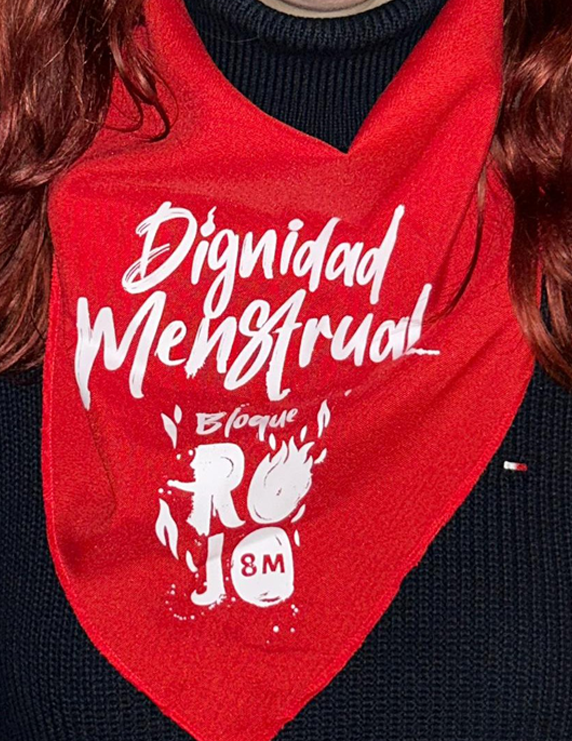
Image by Isabela Hümmelgen
Are pads the priority? Contested framings of the Brazilian National Policy on menstrual health and dignity
Isabela Hümmelgen & Inga T. Winkler
We provide an analysis of menstrual policy-making and advocacy in Brazil, providing a fresh regional perspective to the study of menstrual policies. The Brazilian policy adopted novel and holistic language on health and dignity which is much broader than in other national contexts. Still, policy priorities in Brazil mirrored those in other contexts and remain largely limited to distribution of menstrual products. We nonetheless consider developments in Brazil very promising: Advocates have been actively demanding the implementation of a broader agenda, that includes confronting menstrual stigma, investing in menstrual education, and providing health care services to menstruators.
Hümmelgen, Isabela, and Inga T. Winkler. 2026. "Are pads the priority? Contested framings of the Brazilian National Policy on menstrual health and dignity." In Women's Studies International Forum, vol. 116, 103298, https://doi.org/10.1016/j.wsif.2026.103298